







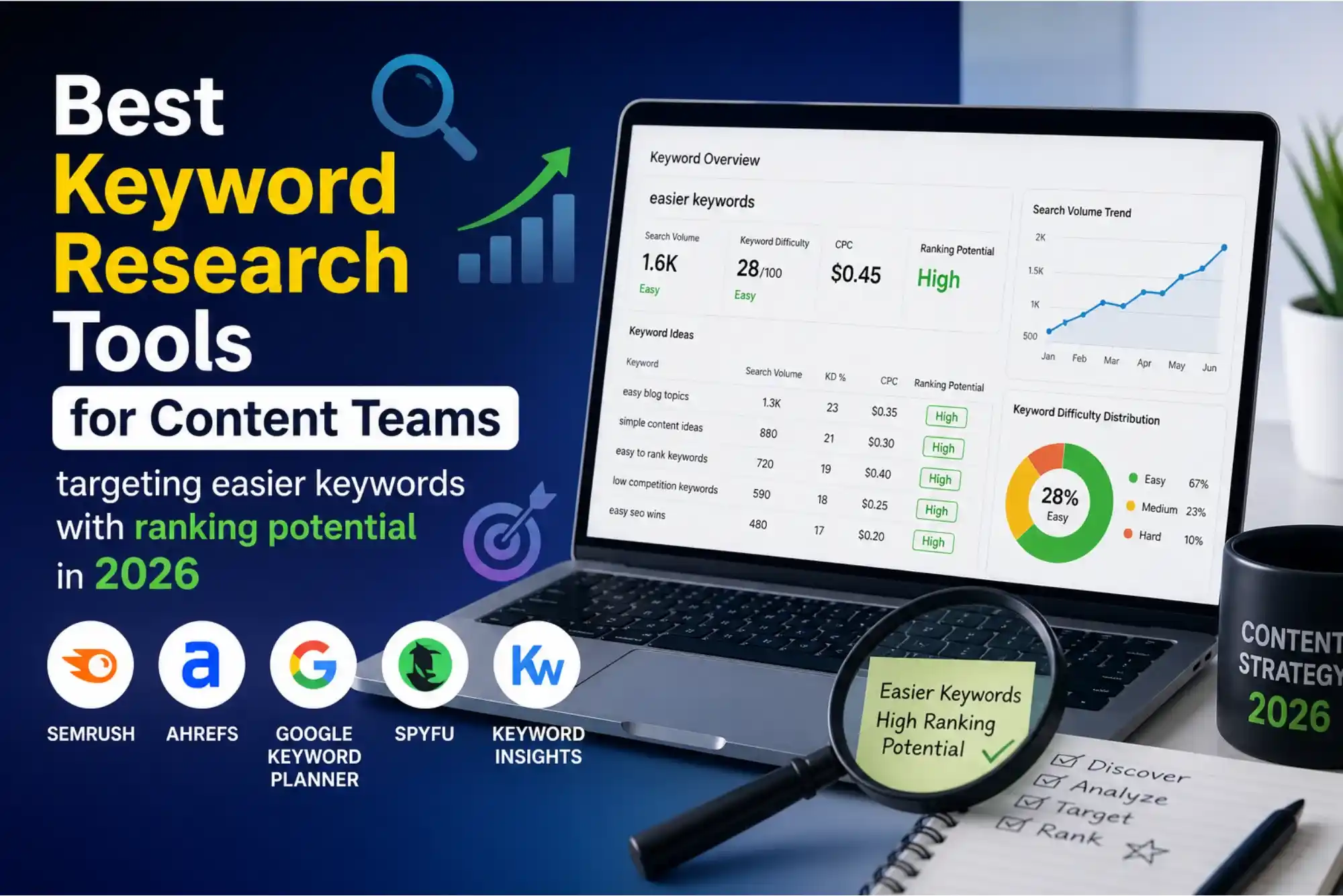
The modern SEO landscape is shaped by smarter algorithms, AI-generated content saturation, and increasingly competitive SERPs. That means content teams must rely on precise tools that go beyond basic keyword suggestions and instead offer deep insights into search intent, difficulty, and ranking potential.
This guide explores the most effective keyword research tools for 2026, specifically tailored for teams aiming to target easier keywords with strong ranking potential. Whether you’re scaling a content operation or refining an existing SEO strategy, these tools will help you build authority where it matters.
Why Easier Keywords Matter More Than Ever
High-volume keywords often look attractive on the surface, but they are usually dominated by authoritative domains. For growing websites or content teams managing multiple properties, targeting these keywords can waste valuable time and resources.
Easier keywords—often referred to as low-difficulty or long-tail keywords—offer a faster path to visibility. They typically have clearer intent, lower competition, and higher conversion potential. In 2026, search engines reward relevance and intent alignment more than raw authority, making these keywords a strategic priority.
What to Look for in a Keyword Research Tool
Accurate Keyword Difficulty Metrics
A reliable keyword difficulty score helps teams quickly assess whether a term is worth targeting. Tools that analyze backlink profiles, domain authority, and SERP competition provide more actionable insights.
Search Intent Analysis
Understanding whether a keyword is informational, transactional, or navigational allows teams to create content that aligns with user expectations—an essential ranking factor in modern SEO.
Content Gap Identification
Advanced tools highlight opportunities where competitors are ranking but your site is not, making it easier to expand topical coverage strategically.
Scalability for Teams
Content teams need tools that support collaboration, reporting, and bulk keyword analysis. Efficiency is critical when managing large-scale SEO campaigns.
Top Keyword Research Tools for 2026
Ahrefs
Ahrefs remains one of the most powerful tools for keyword research. Its keyword explorer provides detailed difficulty scores, click metrics, and SERP analysis. For content teams, the ability to filter keywords by difficulty and traffic potential makes it easier to identify quick wins.
Ahrefs also excels in competitor analysis, allowing teams to reverse-engineer successful content strategies and replicate them with improved execution.
SEMrush
SEMrush continues to evolve as an all-in-one SEO platform. Its keyword magic tool is particularly useful for discovering long-tail variations with lower competition.
For teams working on content scaling, SEMrush’s topic clustering and content template features provide a structured approach to building authority across multiple keywords.
LowFruits
LowFruits has gained popularity for its laser focus on low-competition keywords. It identifies weak spots in SERPs—pages with low authority ranking for specific terms—making it ideal for targeting easier keywords.
This tool is especially valuable for niche websites and content teams looking to dominate specific segments quickly.
Ubersuggest
Ubersuggest offers a user-friendly interface with solid keyword suggestions and difficulty metrics. While not as advanced as enterprise tools, it provides excellent value for teams working with limited budgets.
Its content ideas feature also helps identify trending topics that can be turned into high-performing articles.
Google Keyword Planner
Despite being designed for advertisers, Google Keyword Planner remains a reliable source of keyword data directly from Google. It’s particularly useful for validating search volume and identifying seasonal trends.
For content teams, combining this data with insights from other tools creates a more comprehensive strategy.
How Content Teams Can Build a Winning Keyword Strategy
Focus on Topical Authority
Instead of targeting isolated keywords, build clusters around a central topic. This approach signals expertise to search engines and improves overall rankings.
For example, a travel website can expand beyond general guides by covering niche topics like budget planning, seasonal travel tips, and destination-specific insights—similar to how practical travel strategies for beginners help users make informed decisions.
Leverage Internal Linking
Strategic internal linking strengthens content relationships and distributes authority across pages. It also improves user navigation and engagement.
Many successful websites integrate SEO-focused content with broader guides, such as long-term traffic strategies through guest posting, to enhance overall visibility.
Prioritize Search Intent Over Volume
Keywords with clear intent often outperform high-volume terms. A smaller audience with strong intent is more likely to engage, convert, and share content.
Continuously Update Content
SEO is not a one-time effort. Regular updates ensure content remains relevant and competitive. Refreshing older articles with new data, keywords, and insights can significantly boost rankings.
Common Mistakes to Avoid
Chasing High Volume Keywords
Focusing solely on search volume can lead to missed opportunities. High-volume keywords are often saturated and difficult to rank for.
Ignoring SERP Analysis
Understanding the current search results is essential. If the top results are dominated by authoritative domains, it may be better to target a different keyword.
Overlooking Content Quality
Even the best keyword strategy will fail without high-quality content. Search engines prioritize content that delivers real value and satisfies user intent.
The Role of AI in Keyword Research
AI-driven tools are transforming keyword research by analyzing massive datasets and predicting trends. These tools can identify emerging keywords before they become competitive, giving content teams a significant advantage.
However, relying solely on AI without human oversight can lead to generic or misaligned content. The best results come from combining AI insights with editorial expertise.
Scaling Keyword Research Across Teams
For larger content teams, consistency is key. Establishing clear processes for keyword research, content creation, and performance tracking ensures efficiency and scalability.
Teams that integrate SEO into broader digital strategies—such as building sustainable online income streams—often achieve more stable long-term growth.
Final Thoughts
In 2026, successful keyword research is about precision, not volume. Content teams that focus on easier keywords with clear intent and realistic competition will consistently outperform those chasing broad, high-volume terms.
The tools highlighted in this guide provide the insights needed to uncover these opportunities and build a scalable SEO strategy. When combined with high-quality content, strategic internal linking, and continuous optimization, they form the foundation of sustainable organic growth.
As search engines continue to evolve, the ability to adapt and refine your keyword strategy will remain one of the most valuable skills for any content team.
Related Reading: Best AI SEO Tools for Content Teams that surface easier keyword opportunities in 2026

