






For many international travelers, the United States remains one of the world’s most desired destinations for business meetings, tourism, medical visits, and family trips. Yet before planning flights or hotel stays, one practical question always comes first: how much does the visa actually cost?
The B1 B2 Visa Price in 2026 has become a major discussion point among travelers as embassy demand rises and international travel rebounds. While the official application fee is straightforward, the real expense often includes appointment logistics, documentation, travel to embassy centers, passport delivery, and renewal-related charges that applicants rarely consider in advance.
Understanding the complete cost structure can help travelers avoid delays, budgeting mistakes, and unnecessary third-party expenses. Whether you are applying for the first time or renewing an existing U.S. visa, this guide explains the updated fees and the hidden costs that frequently catch applicants off guard.
What Is the B1/B2 Visa?
The B1/B2 visa is a non-immigrant U.S. visa designed for temporary visits. The B1 category covers business-related travel such as conferences, negotiations, and meetings, while the B2 category is used for tourism, vacations, medical treatment, or visiting family members.
In most cases, applicants receive a combined B1/B2 visa, allowing both business and leisure travel under one visa stamp. The visa validity depends on nationality and reciprocal agreements between the United States and the applicant’s home country.
Travel planning often begins with budgeting, much like travelers compare airfare costs in guides such as international airline ticket price breakdowns before choosing routes. Visa costs deserve the same level of attention because they directly affect the overall travel budget.
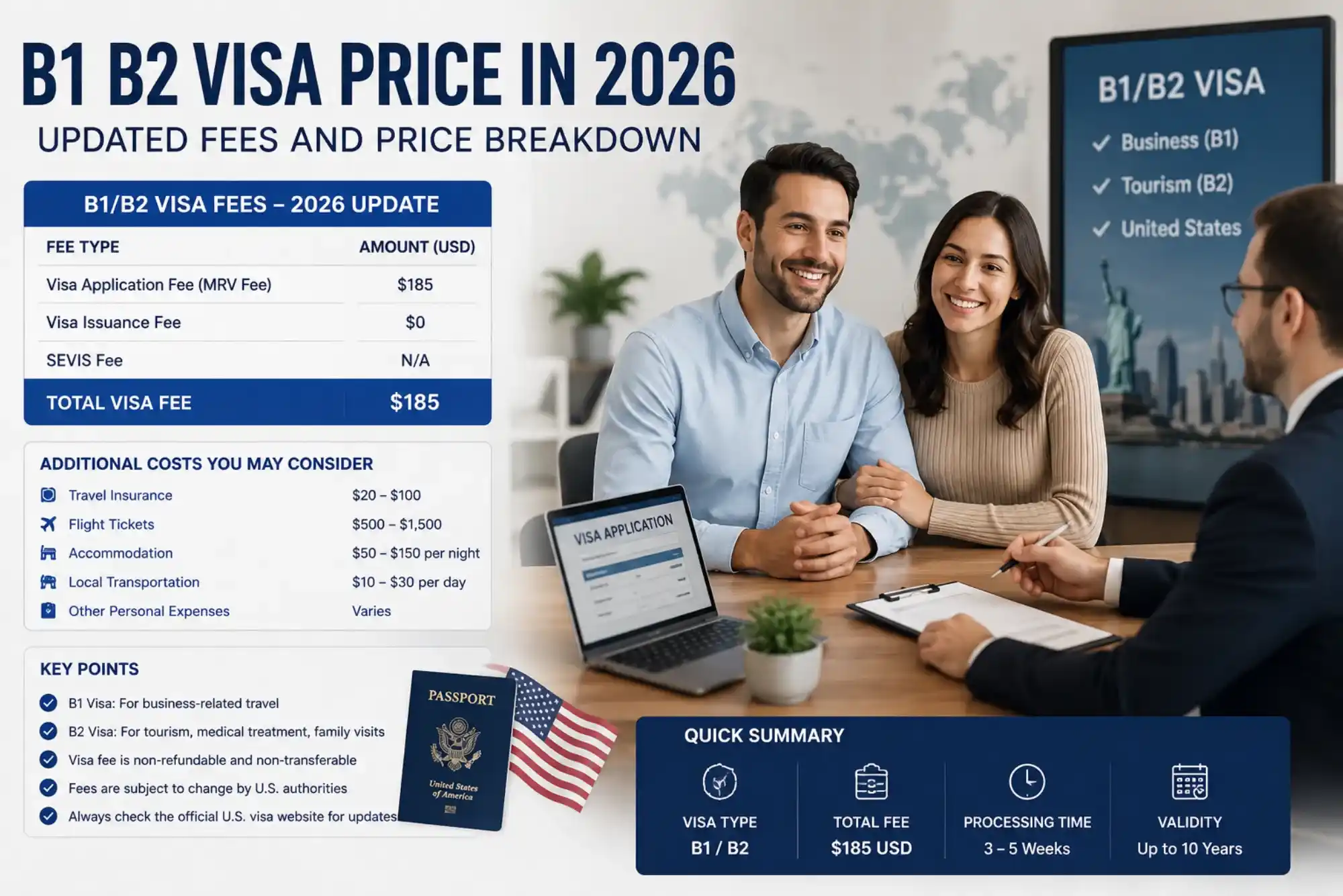
B1 B2 Visa Price in 2026: Official Fee Breakdown
The U.S. Department of State continues to classify the B1/B2 visa under machine-readable non-immigrant visas. The standard application fee remains mandatory for all applicants, regardless of approval outcome.
| Visa Expense | Estimated Cost (2026) |
|---|---|
| DS-160 Application Fee | $185 |
| Visa Appointment Scheduling | Usually Included |
| Passport Delivery/Courier | $10–$40 |
| Photograph Services | $5–$20 |
| Document Translation (if needed) | $20–$100 |
| Travel to Embassy or Consulate | Varies by Location |
| Visa Renewal Fee | $185 |
The official visa fee is paid before the embassy interview can be scheduled. Importantly, the payment is non-refundable, even if the visa is denied.
Applicants should always verify current fee details through the official U.S. Department of State website and the U.S. embassy portal in their country:
Why the “Real” Visa Cost Is Often Higher
The advertised application fee tells only part of the story. In reality, applicants frequently spend significantly more due to indirect expenses connected to the process.
One of the biggest overlooked costs is transportation. Many countries have only one or two U.S. consulates handling visa interviews, forcing applicants to travel long distances. Hotel stays, meals, local transport, and missed workdays can easily exceed the embassy fee itself.
Another factor is documentation preparation. Some applicants hire consultants to review forms, organize financial statements, or prepare interview files. While not mandatory, these services can add hundreds of dollars to the total process.
The same budgeting mindset appears in travel-related planning articles like hotel pricing and travel cost guides, where hidden fees often shape the final expense more than the base price itself.
How Exchange Rates Affect Visa Costs
Although U.S. visa fees are listed in dollars, many embassies require payment in local currency. That means exchange-rate fluctuations can noticeably change the actual amount applicants pay.
In countries experiencing inflation or currency instability, the local equivalent of the B1/B2 visa fee may rise multiple times throughout the year. Applicants who delay payment may end up spending considerably more than expected.
For this reason, travelers planning U.S. trips in 2026 are increasingly monitoring exchange markets before initiating their applications.
Can You Pay Less for a B1/B2 Visa?
There is no legal discount on the official visa fee. However, applicants can reduce unnecessary expenses by handling parts of the process independently.
Many travelers pay excessive consultancy charges for tasks that can be completed online in less than an hour. The DS-160 form, while detailed, is manageable for most applicants who carefully follow embassy instructions.
Applicants can also save money by:
- Using digital document storage instead of printed copies
- Scheduling interviews during off-peak travel periods
- Avoiding unauthorized agents or “guaranteed approval” services
- Combining embassy travel with existing business or family trips
The U.S. government does not authorize private agencies to guarantee approvals. Any service promising certain visa success in exchange for extra payment should be treated cautiously.
Interview Waivers and Renewal Costs in 2026
In recent years, some applicants renewing expired visas have qualified for interview waivers, depending on embassy policy and expiration timelines. While this can reduce travel and scheduling costs, the actual visa application fee still applies.
Renewal applicants often assume the process will be cheaper, but the government filing fee generally remains identical to first-time applications.
That said, waivers can still provide major savings in indirect expenses, especially for travelers living far from embassy locations.
How Long Does the Visa Remain Valid?
The validity period for a B1/B2 visa depends on the applicant’s nationality and bilateral agreements with the United States. Some visas are valid for 10 years with multiple entries, while others may carry shorter durations.
Because of this long-term usability, many travelers view the visa cost as a multi-year investment rather than a one-time travel expense.
For frequent business travelers, the visa often pays for itself after only a few trips. Professionals attending conferences, trade events, and client meetings benefit from the flexibility of long-term entry permissions.
What Happens If the Visa Is Refused?
A visa refusal does not trigger a refund. Once the fee is paid and the application is processed, the money cannot be recovered.
This is why preparation matters. Consular officers assess applicants based on travel intent, financial stability, ties to the home country, and overall credibility during the interview.
Applicants should avoid memorized responses or exaggerated travel plans. Clear, honest answers usually create stronger impressions than over-prepared scripted statements.
Travel-focused readers often compare visa preparation with broader international travel readiness, much like planning guides for destinations such as international accommodation and trip planning emphasize realistic expectations instead of idealized travel assumptions.
Expected Processing Trends in 2026
Global demand for U.S. visitor visas continues to grow in 2026. Many embassies still face appointment backlogs caused by increased travel demand and staffing limitations.
As a result, applicants are being encouraged to apply months in advance rather than waiting until travel dates approach.
Processing speed can vary dramatically between countries. Some embassies offer interview appointments within weeks, while others may require several months of waiting time.
Current appointment wait estimates are available through the official U.S. visa portal:
https://travel.state.gov/content/travel/en/us-visas/visa-information-resources/wait-times.html
Should Travelers Use Visa Agencies?
Visa agencies can be helpful in complicated situations involving prior refusals, documentation concerns, or urgent travel needs. However, many standard tourist and business visa applications do not require professional representation.
The key is choosing reputable providers when assistance is needed. Applicants should avoid agencies that request unusually high upfront payments or promise guaranteed approvals.
Ultimately, the decision depends on comfort level, language ability, and familiarity with embassy procedures.
Final Thoughts on the B1 B2 Visa Price in 2026
The B1 B2 Visa Price in 2026 goes beyond the official $185 application fee. For many applicants, the true expense includes transportation, preparation, documentation, and appointment logistics that can substantially increase the overall cost.
Still, for travelers seeking access to the United States for tourism, business, or family visits, the visa remains one of the most valuable long-term travel documents available. Understanding the full financial picture ahead of time allows applicants to prepare strategically and avoid unnecessary stress during the process.
As global travel continues evolving in 2026, informed planning remains the smartest way to navigate visa applications efficiently and confidently.
FAQs
How much is the official B1/B2 visa fee in 2026?
The standard U.S. B1/B2 visa application fee in 2026 is approximately $185.
Is the B1/B2 visa fee refundable if rejected?
No. The application fee is non-refundable regardless of approval or refusal.
How long is a B1/B2 visa valid?
Validity varies by nationality, but many applicants receive visas valid for up to 10 years.
Can I renew my B1/B2 visa without an interview?
Some applicants qualify for interview waivers depending on embassy rules and prior visa history.
Are visa consultancy services mandatory?
No. Most applicants can complete the DS-160 form and scheduling process independently.
Related Reading: Student Visa Price for USA in 2026: Updated Fees and Price Breakdown — full guide
Related Reading: USA Visit Visa Price in 2026: Breaking Down Every Visa Charge and Fee

