



Introduction
Flying with a dog can be a rewarding experience when planned carefully. However, cabin pet policies vary widely between airlines and destinations. Understanding airline weight limits, approved pet crates, documentation, and airport procedures can prevent stressful surprises.
Flying with a Dog in Cabin: Airline Weight Limits, Pet Crates, and Rules should be checked well before booking your ticket. Airlines often limit the combined weight of the dog and carrier. They may also require specific crate dimensions that fit beneath the seat.
Some airlines permit small dogs in the cabin as carry-on pets. Others only allow service animals or restrict pets on particular routes. Therefore, checking the airline’s current policy is an essential first step.
If you are researching broader pet travel requirements, this guide to Flying With Pets can provide additional travel planning information.
Understanding Airline Weight Limits for Dogs
One of the most important parts of Flying with a Dog in Cabin: Airline Weight Limits, Pet Crates, and Rules is understanding weight restrictions. Airlines commonly set a maximum combined weight for the pet and carrier.
The exact limit depends on the airline. Some carriers accept small dogs weighing around 8 kilograms with their carrier. Others may have different limits or use carrier dimensions rather than weight alone.

A dog that technically meets the weight requirement may still be refused if the carrier does not fit beneath the aircraft seat. Therefore, both measurements matter.
Before purchasing a ticket, measure your dog’s height, length, and overall weight. Then compare those measurements with the airline’s published requirements.
Why the Combined Weight Matters
Airlines often consider the dog and carrier together. A lightweight dog can still exceed the limit when placed inside a heavy carrier.
For this reason, choose a carrier that is sturdy but reasonably lightweight. Never sacrifice ventilation or structural safety simply to reduce weight.
Also remember that airline policies can change. Always confirm the rules directly with the airline before your travel date.
Choosing the Right Pet Crate or Carrier
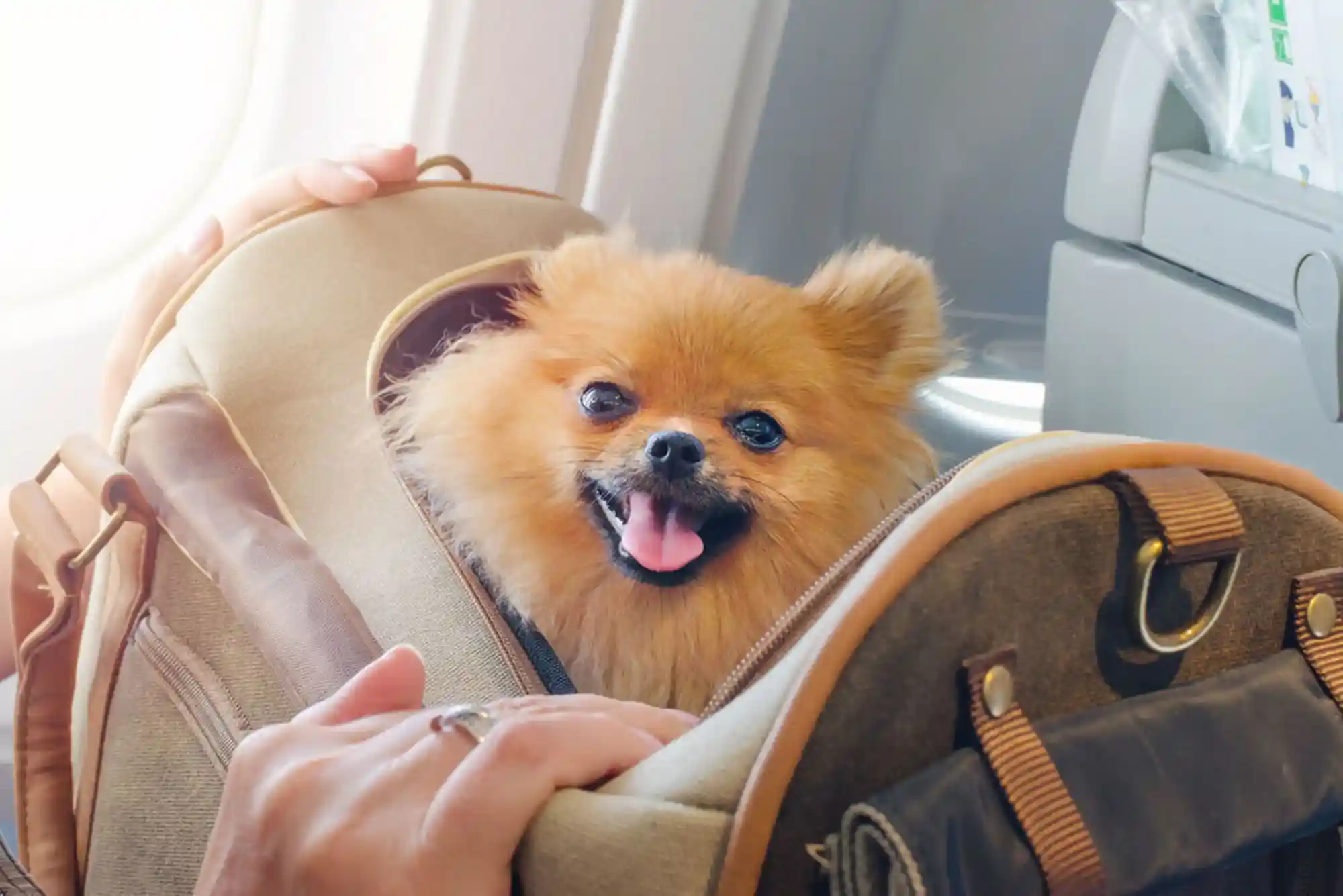
A suitable carrier is central to Flying with a Dog in Cabin: Airline Weight Limits, Pet Crates, and Rules. Most airlines require the pet carrier to fit completely underneath the seat in front of you.
Soft-sided carriers are often useful because they can provide some flexibility. However, the airline determines whether a particular carrier is acceptable.
The carrier should provide adequate ventilation on several sides. Your dog should have enough space to remain comfortable without being excessively restricted.
A secure zipper or locking mechanism is also important. Your dog should not be able to escape during boarding, takeoff, landing, or turbulence.
Measure the Carrier Before Flying
Do not rely solely on the dimensions printed by a retailer. Measure the carrier yourself, especially if it has flexible sides.
Aircraft seat configurations differ. Consequently, a carrier that works on one aircraft may not fit beneath another seat.
Contact the airline if you are uncertain about the permitted dimensions. Getting confirmation before departure can prevent problems at the airport.
Airline Rules You Should Check Before Booking
Every airline has its own pet travel conditions. Some allow only a limited number of pets in the cabin per flight. Others require advance reservations for pets.
Cabin pet space can be limited, so adding your dog after purchasing a ticket may not always be possible. Reserve the pet space as early as possible.
Airlines may also charge a separate pet fee. The fee can vary according to the airline, route, and travel class.
Your destination creates another layer of requirements. International travel may involve vaccination records, health certificates, microchip requirements, import permits, or quarantine rules.
Therefore, Flying with a Dog in Cabin: Airline Weight Limits, Pet Crates, and Rules involves more than simply purchasing a ticket.
Preparing Your Dog for Cabin Travel
A calm dog usually makes the flight easier for everyone. Preparation should begin weeks before the journey rather than on departure day.
Allow your dog to become comfortable with the carrier at home. Leave it open in a familiar area and encourage your dog to explore it voluntarily.
Gradually increase the time your dog spends inside the carrier. This can help make the carrier feel familiar rather than frightening.
Avoid introducing a new carrier immediately before the flight. Your dog needs time to develop confidence around it.
Exercise your dog appropriately before leaving for the airport. However, avoid exhausting your pet or changing its normal routine dramatically.
Food timing also deserves attention. A large meal immediately before flying may cause discomfort. Ask your veterinarian about appropriate feeding and hydration practices for your individual dog.
Documents and Health Requirements
Documentation is another important part of Flying with a Dog in Cabin: Airline Weight Limits, Pet Crates, and Rules. Domestic and international requirements can differ significantly.
Depending on your destination, you may need vaccination records, identification information, a health certificate, or other veterinary documentation.
International travel can involve additional government requirements. These may include microchip identification, rabies vaccination rules, parasite treatments, or specific certificates.
Do not assume that meeting your airline’s requirements means you automatically meet destination requirements. Airlines manage transportation policies, while governments establish entry regulations.
For U.S.-related aviation information, travelers can review official FAA Pet Travel Regulations and related aviation guidance.
When traveling internationally, check the official government authority for both your departure country and destination country.
What Happens at the Airport?
Arrive early when traveling with a dog. Pet check-in can require additional time compared with standard passenger check-in.
Your airline may need to inspect the carrier or confirm your pet reservation. Airport security procedures can also require you to remove your dog from the carrier.
During security screening, follow the instructions provided by airport security personnel. Never place your dog through an airport screening machine.
A leash or harness is especially useful during security procedures. It reduces the risk of your dog running away in an unfamiliar environment.
After security, find a suitable pet relief area if one is available. Give your dog an opportunity to relieve itself before boarding.
During the Flight
Once onboard, your dog will generally need to remain inside the approved carrier. Airlines commonly require the carrier to stay beneath the seat during critical phases of flight.
Do not remove your dog simply because it appears calm. Follow the crew’s instructions throughout the journey.
Keep the carrier positioned so ventilation remains unobstructed. Avoid covering it completely with blankets, especially in a way that restricts airflow.
Speak calmly to your dog if it becomes nervous. Your familiar voice can provide reassurance without disturbing nearby passengers.
Water management also matters. A spill-proof container can help provide hydration when permitted by the airline.
Common Mistakes to Avoid
Many pet travel problems happen because owners check requirements too late. One common mistake is assuming every airline follows the same cabin pet rules.
Another mistake is buying a carrier based only on marketing claims such as “airline approved.” Approval depends on the individual airline and aircraft requirements.
Travelers can also overlook destination regulations. This becomes particularly important for international journeys.
Do not sedate your dog unless specifically advised by a qualified veterinarian. Sedation can create additional risks during air travel.
Finally, avoid rushing the carrier training process. A dog unfamiliar with confinement may become considerably more anxious during the flight.
Making Cabin Travel Easier for Your Dog
Successful Flying with a Dog in Cabin: Airline Weight Limits, Pet Crates, and Rules starts with preparation. Confirm your airline’s policy, reserve the pet space, select an appropriate carrier, and organize documents early.
Keep important records accessible during the journey. Your dog’s vaccination information and travel documents should not be buried inside checked luggage.
Consider your entire itinerary when planning. A direct flight may be preferable because it reduces airport transfers, waiting periods, and additional handling.
If a connection is unavoidable, check whether the connecting airport provides pet relief facilities. Also allow sufficient time between flights.
Travel planning resources from Tourbyroad can also help travelers prepare for different aspects of a trip.
Frequently Asked Questions
Can I bring my dog in the cabin on a plane?
Many airlines allow small dogs in the cabin if they meet specific requirements. The dog generally must remain inside an approved carrier under the seat.
What is the maximum weight for a dog to fly in the cabin?
There is no universal cabin weight limit. Each airline establishes its own rules, and some consider the combined weight of the dog and carrier.
What size carrier is allowed for a dog in the cabin?
The carrier must generally fit underneath the seat in front of you. Maximum dimensions vary according to airline and aircraft.
Can my dog sit on my lap during the flight?
Most airlines require cabin pets to remain inside their carrier. Some exceptions may apply to properly recognized service animals under applicable rules.
Does my dog need a health certificate to fly?
Requirements depend on the airline, destination, and type of travel. International journeys commonly involve additional documentation.
Should I sedate my dog before flying?
You should not sedate your dog without professional veterinary advice. Discuss your dog’s travel anxiety and overall health with your veterinarian before the journey.
Conclusion
Flying with a Dog in Cabin: Airline Weight Limits, Pet Crates, and Rules becomes much easier when you prepare well in advance. The most important steps are confirming airline requirements, measuring your carrier, checking weight restrictions, and preparing the necessary documents.
Related Reading: How to Fly with a Cat: Litter Solutions, Sedatives, and Airport Security

