






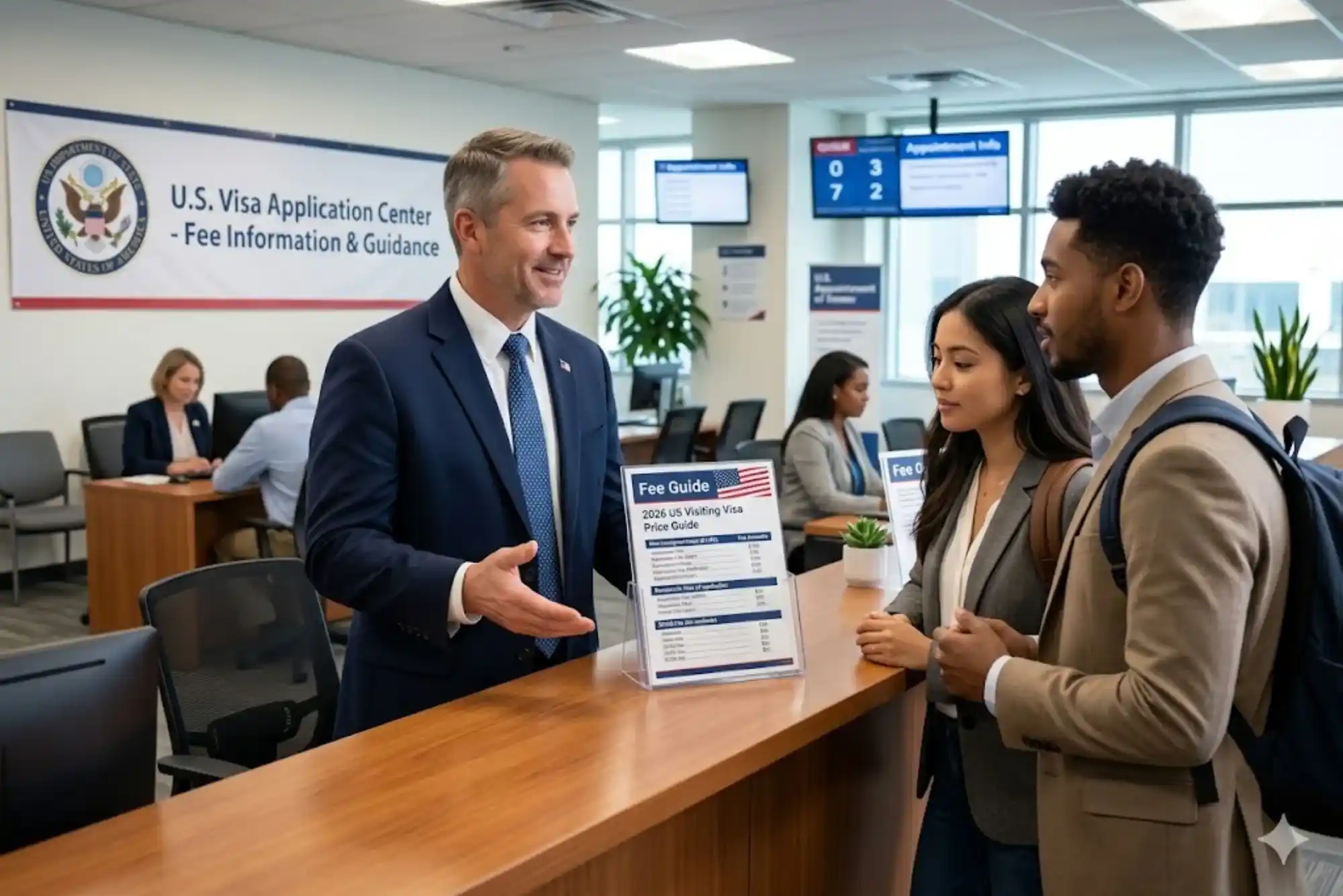
Planning a trip to the United States is exciting — but before you pack your bags, you need to understand exactly what the US visiting visa will cost you in 2026. Visa fees are often one of the most misunderstood parts of the application process, with many applicants unaware of the additional charges layered on top of the base application fee. This guide breaks down every cost involved so you can budget accurately and avoid surprises.
What Is the US Visiting Visa?
The US visiting visa — officially known as the B1/B2 nonimmigrant visa — is the standard travel authorization issued to foreign nationals who want to enter the United States for tourism, family visits, medical treatment, or short-term business meetings. It is a temporary visa that does not grant the right to work or study in the country.
The B1 category covers business-related visits such as conferences and negotiations, while B2 covers tourism, holidays, and personal visits. In most cases, applications are submitted together under a combined B1/B2 classification, and the fee structure applies to both equally.
US Visiting Visa Fee in 2026
The core cost of applying for a US visiting visa is the MRV fee — short for Machine Readable Visa fee. This is the non-refundable application processing fee paid directly to the US government before your visa interview is scheduled. As of 2026, this fee has been updated following a significant revision that came into effect in mid-2023.
| Visa Category | Visa Type | MRV Fee (USD) |
|---|---|---|
| B1/B2 – Tourist / Business Visitor | Nonimmigrant Visitor Visa | $185 |
| Transit Visa (C) | Airport or Port Transit | $185 |
| Student Visa (F/M) | Academic / Vocational | $185 |
| Exchange Visitor (J) | Cultural Exchange Program | $185 |
| Petition-Based Visas (H, L, O, P, Q, R) | Work / Employment | $205 |
For most travelers applying for a B1/B2 visiting visa, the MRV application fee is $185 USD. This amount is paid online through the official US visa portal and is non-refundable regardless of whether your visa is approved or denied.
Complete Breakdown of US Visa Charges
The MRV fee is just one part of the total cost. Depending on your country of application and personal circumstances, there are several additional charges that may apply. Understanding each one separately will give you a realistic picture of your total expenditure.

| Fee Type | Amount (USD) | Notes |
|---|---|---|
| MRV Application Fee (B1/B2) | $185 | Mandatory. Non-refundable. Paid online before interview. |
| Visa Issuance / Reciprocity Fee | Varies by nationality | Charged based on bilateral agreements. May be $0 to $200+. |
| Biometrics Collection Fee | Included / varies | Generally included at US embassies. Some VACs charge separately. |
| Visa Application Center (VAC) Service Fee | $20 – $60 approx. | Charged by third-party service centers where applicable. |
| Courier / Document Return Fee | $10 – $30 approx. | Optional. Charged for passport delivery back to applicant. |
| Medical Examination (if required) | Varies | Not always required for B1/B2 visas. Typically required for immigrant visas. |
| Travel Insurance (Recommended) | $30 – $150+ | Not mandatory for B1/B2 but strongly advisable. |
It is worth noting that the reciprocity fee — a charge based on what your home country charges American citizens for equivalent visas — can significantly increase your total cost. Applicants from countries that charge US citizens high visa fees may face reciprocity surcharges on top of the standard MRV fee. You can verify the reciprocity fee for your nationality through the official US Department of State website.
Visa Issuance Reciprocity Fee by Region
The reciprocity fee varies widely depending on the applicant’s nationality. Citizens of many countries — including most of Europe, Canada, Australia, and parts of Asia — pay no reciprocity fee at all. However, some nationalities do face an additional charge. Below is a general overview by region:
| Region / Country Group | Typical Reciprocity Fee |
|---|---|
| European Union (most countries) | $0 |
| UK, Canada, Australia, New Zealand | $0 |
| India | $0 |
| Pakistan | $0 |
| Some Latin American Countries | $10 – $150 (varies) |
| Some African Countries | $0 – $100 (varies) |
| Russia | Varies significantly |
Always check the current reciprocity schedule on the US Department of State’s official reciprocity table before finalizing your budget. Fees are subject to change based on diplomatic agreements between countries. You can find accurate and current information at the US Department of State travel portal.
How to Pay the US Visa Fee
Paying the MRV fee is a mandatory step before you can schedule your visa interview. The process is straightforward but must be followed in a specific order. Here is how it typically works for most applicants:
- Visit the official US visa application website for your country (managed by USCIS or the designated service provider).
- Complete the DS-160 online nonimmigrant visa application form.
- Pay the $185 MRV fee online using a debit card, credit card, or bank transfer depending on options available in your country.
- Receive your payment confirmation and fee receipt number.
- Use the receipt number to schedule your biometrics appointment and visa interview at the nearest US Embassy or Consulate.
In some countries, the fee may be paid at a designated bank rather than online. The payment method depends on the local US Embassy’s instructions, so always check the specific requirements for the country where you are applying.
Is the US Visa Fee Refundable?
No. The MRV fee is strictly non-refundable. Whether your visa application is approved, denied, or withdrawn, the $185 payment will not be returned. There are no exceptions to this policy, including in cases where the interview was canceled or rescheduled. The only limited exception is if a technical error occurred during the payment process itself, which would need to be reported directly to the embassy.
However, MRV fee receipts are generally valid for one year from the date of payment. This means that if you pay the fee and cannot attend your interview within the scheduled timeframe, you may be able to reschedule the interview without paying again — as long as it is within the validity window of the original receipt.
Total Estimated Cost of a US Visiting Visa in 2026
To give you a practical estimate, here is what the total cost of obtaining a US B1/B2 visiting visa could look like for a typical applicant in 2026:
| Cost Component | Estimated Amount (USD) |
|---|---|
| MRV Application Fee | $185 |
| Reciprocity Fee (if applicable) | $0 – $200+ |
| VAC Service Center Fee | $20 – $60 |
| Courier / Passport Return Fee | $10 – $30 |
| Travel Insurance (Recommended) | $30 – $150 |
| Estimated Total | $245 – $625+ |
This range depends heavily on your nationality, the country of application, and whether you opt for additional services such as premium passport delivery. For most applicants from countries with no reciprocity fee, the realistic total cost falls between $245 and $275 when including basic service center and courier fees.
If you are also budgeting for your travel once approved, it helps to research airline options in advance. Checking current airline ticket prices can help you plan your total travel budget more accurately well before your visa appointment.
US Visa Validity and Stay Duration
Understanding what you get after paying the fee is just as important as the cost itself. A US B1/B2 visiting visa is typically issued as a multiple-entry visa, meaning you can enter the US more than once during its validity period without reapplying.
| Feature | Details |
|---|---|
| Standard Validity Period | 10 years (for eligible nationalities) |
| Entry Type | Multiple entry |
| Permitted Stay Per Entry | Up to 6 months (determined by CBP officer at port of entry) |
| Extension Possible? | Yes, through USCIS Form I-539 (not guaranteed) |
Some nationalities receive shorter validity visas due to reciprocity arrangements. The actual duration of stay permitted on each visit is determined by the Customs and Border Protection officer at the port of entry — the visa validity period itself does not determine how long you can stay on any single trip.
Planning where to stay once you arrive is equally important. Whether you are visiting major cities or quieter destinations, reviewing hotel prices early in the process helps you estimate your total travel budget more efficiently.
Documents Required for the US Visiting Visa
While this guide focuses on fees, it is useful to understand the key documents required alongside your application. Missing documents can result in delays that extend your timeline and, in some cases, require you to reschedule your interview — which, while not an added fee, does cost time.
- Valid passport with at least six months validity beyond your intended stay
- Completed DS-160 nonimmigrant visa application form
- MRV fee payment receipt
- Recent passport-sized photographs meeting US Embassy specifications
- Proof of financial sufficiency (bank statements, salary slips)
- Proof of strong ties to your home country (employment letter, property, family)
- Travel itinerary or invitation letter (if applicable)
- Previous US visa copies (if applicable)
For travelers who enjoy exploring new destinations, it also helps to be well-prepared before heading to unfamiliar territory. Whether you are visiting for leisure or business, reading practical travel tips ahead of time can make a significant difference in how smoothly your trip unfolds.
Frequently Asked Questions
How much is the US visiting visa fee in 2026?
The standard MRV application fee for a B1/B2 US visiting visa in 2026 is $185 USD. This is non-refundable and must be paid before scheduling your visa interview. Additional charges such as reciprocity fees and service center fees may apply depending on your nationality and country of application.
Is the US visa fee the same for all nationalities?
The MRV base fee of $185 is the same for all nationalities. However, a reciprocity fee may be added on top depending on bilateral agreements between your home country and the United States. The reciprocity fee varies by nationality and can range from $0 to over $200 in some cases.
Can I get a refund if my US visa is denied?
No. The MRV fee is non-refundable under all circumstances, including visa denial. However, the receipt remains valid for 12 months from the payment date, meaning you can reschedule your interview within that window without paying the fee again.
How long is a US B1/B2 visiting visa valid?
For most nationalities, a US B1/B2 visa is issued with a 10-year validity period and allows multiple entries. The permitted length of stay per visit — typically up to six months — is determined by the immigration officer at the US port of entry.
Are there any hidden fees in the US visa process?
The main fees are the MRV application fee, the reciprocity fee (if applicable), and service center or courier charges. There are no hidden government fees, but third-party visa agencies or visa assistance services may charge additional consultation or processing fees if you choose to use them.
The US visiting visa price in 2026 starts at $185 for the standard B1/B2 MRV application fee, but your total cost can range from around $245 to well over $600 depending on your nationality, service options, and additional requirements. Understanding every fee category in advance allows you to budget confidently and approach the application process without financial surprises.
Whether you are visiting for leisure, family, or business, thorough preparation — both financial and documentary — significantly improves your chances of a smooth application. Start by checking the reciprocity fee specific to your nationality, confirm the current MRV fee on the official US Embassy website for your country, and keep all receipts and confirmation numbers safely stored throughout the process. A well-prepared application is always your strongest foundation. For travelers also planning their accommodation, exploring hotel options in the US early is a smart move once your visa journey is underway.

