




Introduction
Traveling with a dog is exciting, but it also comes with one concern every responsible owner should take seriously: what happens if your dog gets loose in an unfamiliar place? A reliable tracker can make the difference between searching blindly and knowing where to start.
The best GPS dog trackers for traveling depend heavily on where you are going. A cellular tracker can be excellent for road trips, cities, campgrounds, and areas with dependable mobile coverage. A Bluetooth tag can provide an inexpensive backup for locating a dog near populated areas. For remote hiking, hunting, or wilderness travel, however, a system that does not depend on cellular networks can be much more appropriate.
It is also important to understand that “GPS tracker” describes only part of the technology. GPS determines a device’s position, while another connection—such as cellular, Bluetooth, or radio—usually communicates that position to you. Modern trackers therefore differ less in how they find a location and more in how they get that information back to the owner.
Choosing the right device means looking beyond marketing claims. Battery life, network coverage, tracking frequency, durability, subscription costs, and the environment where you travel all matter.
What Makes the Best GPS Dog Trackers for Traveling?
The best GPS dog trackers for traveling should be dependable when you actually need them. A device that works perfectly at home may become far less useful when you cross into a rural region with weak cellular coverage.
For most travelers, the first consideration should be connectivity. Cellular trackers use GPS to establish your dog’s position and then send that information through a mobile network to an app. Their effective range can therefore be extremely large wherever compatible cellular service exists.

Battery life is equally important. A tracker that needs frequent charging can become a problem during long drives, camping trips, or multi-day adventures. Manufacturer battery claims should also be treated carefully because frequent location updates, movement, poor signal conditions, and other features can increase power consumption.
Water resistance and secure attachment matter too. Dogs can swim, roll in mud, squeeze through bushes, or run through rain without considering your expensive electronics. A travel tracker should remain securely attached to the collar and tolerate the conditions your dog is likely to encounter.
Finally, consider the total cost. A low-cost tracker can become considerably more expensive if it requires a monthly or annual subscription. Cellular trackers commonly depend on subscriptions because the device needs network connectivity and backend services to communicate with your phone.
Cellular GPS Dog Trackers: Best for Most Road Trips
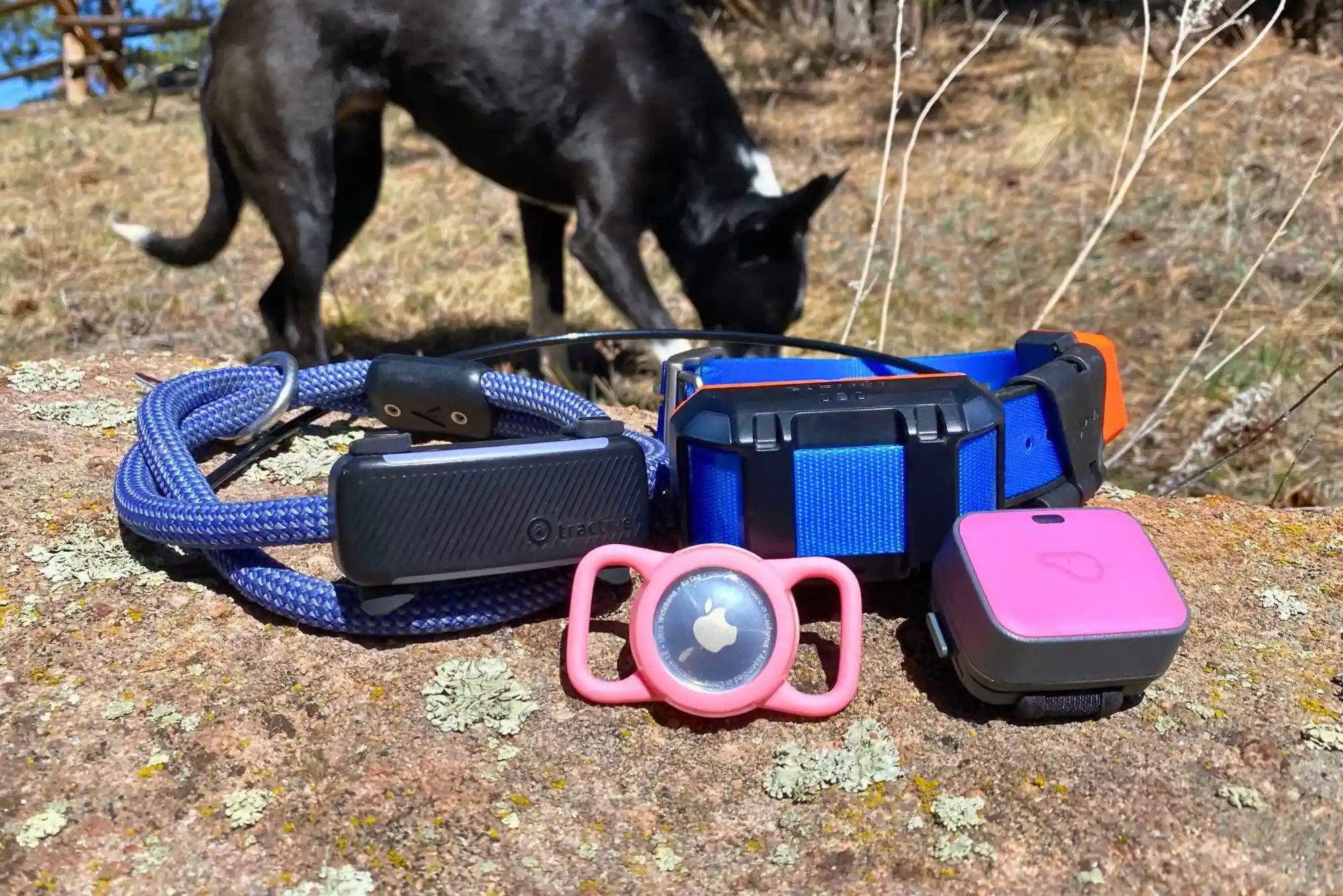
Cellular GPS trackers are generally the most practical choice for everyday travelers. Devices such as Tractive GPS DOG 6 and Fi-series trackers combine satellite positioning with cellular communication, allowing owners to see a dog’s location through a smartphone application.
The important point is that GPS itself does not require cellular service. The tracker can determine its position using navigation satellites. The cellular connection is what allows the tracker to transmit that position to your phone.
This makes cellular technology particularly useful when traveling between towns, staying at hotels, visiting parks with coverage, or taking road trips through populated areas.
Why Cellular Trackers Are Convenient
The biggest advantage is convenience. You normally do not need a dedicated handheld receiver. Your smartphone becomes the viewing device, and many modern apps provide live tracking, location history, virtual fences, and activity information.
Tractive, for example, offers cellular GPS tracking with an app-based experience and is designed for tracking within areas covered by cellular networks. Current reviews describe it as a practical option for dogs that may escape or wander in areas with cellular coverage.
Fi is another notable cellular option. Recent testing reported strong battery performance and useful geofencing features, although real-world battery life can be considerably lower than an advertised maximum depending on usage.
The Biggest Cellular Limitation
Cellular coverage is the weak point.
If you take your dog deep into a wilderness area where there is no compatible mobile signal, a cellular tracker may still know its GPS position but may not be able to send that position to your phone.
This is why travelers should never choose a tracker solely because it has impressive GPS accuracy. Network availability can be more important than the positioning technology itself.
Bluetooth Dog Trackers: Useful as a Backup
Bluetooth trackers work differently. Products such as Apple AirTag are often attached to pet collars, but they should not be confused with dedicated GPS dog trackers.
A Bluetooth tag does not continuously send GPS coordinates to your phone. Instead, it relies on nearby compatible devices to detect its Bluetooth signal and update its reported location through a device network.
That can work surprisingly well in busy neighborhoods, airports, hotels, or other places with plenty of smartphones nearby. It is also attractive because there is generally no cellular tracking subscription.
However, the limitations become obvious in rural areas.
If your dog runs into a sparsely populated forest and there are no compatible devices nearby, a Bluetooth tracker may provide little more than its last detected location. Recent comparisons therefore describe Bluetooth tags as better suited to backup use than as a primary real-time tracking solution.
When Bluetooth Makes Sense
Bluetooth can still be valuable for travelers. Its small size, low cost, and long battery life make it a useful second layer of protection.
For example, a traveler might use a dedicated cellular GPS tracker as the primary system and a Bluetooth tag as a backup. If the GPS tracker runs out of battery or loses network communication, the Bluetooth device could potentially provide another way to locate the dog if compatible devices are nearby.
The key is to understand what you are buying. Calling a Bluetooth tag a GPS tracker can create unrealistic expectations during an emergency.
Satellite and Off-Grid Tracking for Wilderness Travel
If your travels regularly take you beyond cellular coverage, you need to think differently.
True off-grid dog tracking is commonly associated with dedicated radio systems rather than a simple consumer satellite pet tag. Garmin’s Alpha systems, for example, use a direct radio connection between a compatible handheld and dog collar device. This means the dog-tracking connection does not depend on a cellular network.
This approach is especially valuable for hunting, backcountry hiking, large rural properties, and other environments where mobile coverage cannot be trusted.
Garmin’s Alpha 300i is one example of this category. Current published comparisons report tracking distances of up to roughly nine miles under suitable line-of-sight conditions, although actual range varies with terrain, vegetation, elevation, and other environmental factors.
The Alpha 300i also incorporates inReach satellite communication features. However, it is important to distinguish satellite messaging from dog tracking. The satellite functionality provides communication and SOS capabilities for the person carrying the device; the dog-tracking link itself uses direct radio communication.
Why Off-Grid Systems Cost More
Dedicated off-grid systems are more specialized than smartphone-based cellular trackers. You may need a handheld receiver as well as the collar-mounted transmitter.
That makes the initial investment considerably higher. The benefit is independence from cellular networks for the dog-tracking connection.
For someone taking occasional vacations to populated destinations, that extra cost may not make sense. For a serious backcountry traveler, it can be worth paying for the capability you actually need.
Cellular vs. Bluetooth vs. Satellite: Which Is Best?
There is no universal winner because the three technologies solve different problems.
Cellular is usually the strongest all-around choice for ordinary travel because it combines GPS positioning with smartphone connectivity. If your dog escapes from a hotel, campground, neighborhood, or roadside stop where cellular service is available, you can typically track the animal from your phone.
Bluetooth is better considered a low-cost supplementary system. It is convenient and energy-efficient, but it should not be treated as equivalent to real-time GPS tracking.
Off-grid radio systems are the specialist choice. They become increasingly valuable as cellular coverage disappears. If your vacation involves remote forests, mountains, hunting grounds, or isolated campsites, direct radio tracking can provide a major advantage.
The right decision therefore starts with your destination rather than the device’s feature list.
How to Choose a Tracker for Different Types of Travel
For a normal road trip across cities and suburbs, a cellular tracker is usually the most sensible option. You get smartphone access without carrying additional tracking hardware.
For camping at established campgrounds, cellular tracking may still be sufficient, but check coverage around your destination before relying on it.
For international travel, pay close attention to supported countries and cellular networks. A tracker that performs well in one country may have different connectivity or subscription requirements elsewhere.
For remote hiking and wilderness travel, consider a dedicated radio-based tracking system. If your destination has little or no cellular coverage, paying extra for an off-grid system can be more valuable than buying the cheapest cellular tracker.
For urban travel, a Bluetooth tag can be a useful secondary device. Airports, hotels, busy streets, and public spaces provide more opportunities for nearby devices to detect a Bluetooth signal.
Battery Life Matters More Than Most Owners Expect
Battery life is easy to overlook when comparing trackers. Yet during travel, it can become one of the most important features.
GPS tracking, frequent location updates, cellular communication, and poor network conditions can all increase power consumption. A tracker may therefore last substantially less time during an active trip than the manufacturer’s maximum rating suggests.
Before leaving home, fully charge the tracker and check its battery level. Take the charging cable with you and consider carrying a portable power bank during longer trips.
It is also sensible to test the device before traveling. Walk around your neighborhood, activate live tracking, examine location updates, and learn how the emergency features work. Discovering how an unfamiliar app works during a real escape is the worst possible time to learn it.
Don’t Forget the Collar and Identification Tag
Technology should be an additional layer of protection, not your only one.
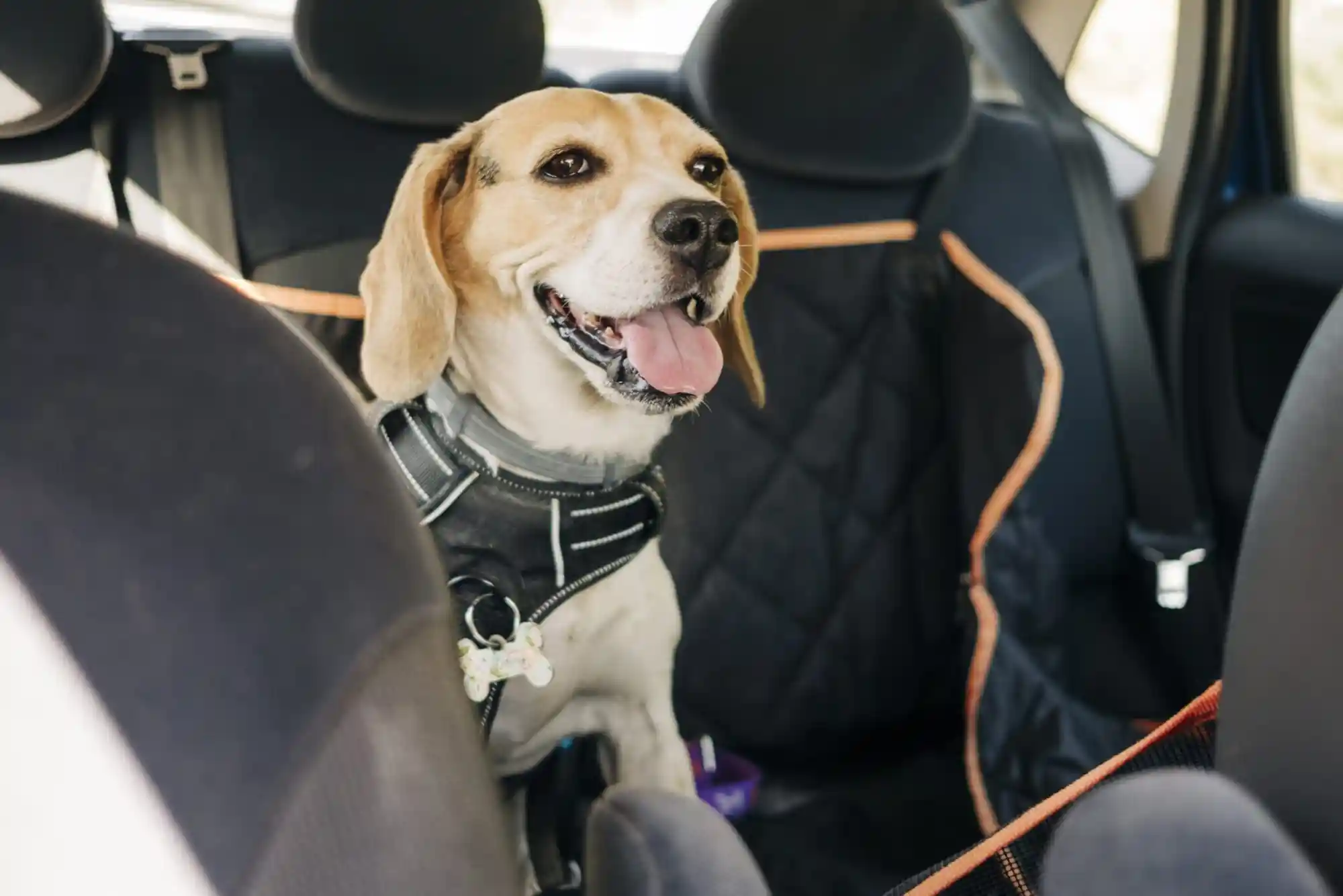
Your dog should still wear a properly fitted collar with current identification information. A person who finds your dog may be able to call you immediately, which can be faster than waiting for a tracking system to update.
The tracker itself also needs to be attached securely. A sophisticated device is useless if it falls off when your dog squeezes under a fence.
Before every major trip, inspect the collar, attachment point, identification tag, and tracker. A few seconds of preparation can prevent a much larger problem later.
Are GPS Dog Trackers Worth It for Travel?
For dogs that travel frequently, especially dogs that spend time outdoors, a quality tracker can be a worthwhile investment.
The value is not simply the ability to watch your dog on a map. It is the reduction in uncertainty if something goes wrong. Instead of wondering whether your dog headed toward a road, trail, campground, or nearby neighborhood, you may have useful location information to guide your search.
The best GPS dog trackers for traveling are therefore the ones that match your actual environment. A $50 cellular tracker is not automatically better than a more expensive off-grid system, and a Bluetooth tag is not a substitute for either when real-time tracking is essential.
Choose the Technology That Matches Your Trip
The best GPS dog trackers for traveling are not necessarily the most expensive models. The right choice depends on where your dog will travel and which communication networks are available there.
Cellular GPS trackers are the best fit for most everyday road trips and populated destinations. Bluetooth tags are useful as inexpensive backup devices, particularly in areas with many compatible smartphones. For serious wilderness travel where cellular networks disappear, dedicated radio-based systems such as Garmin’s Alpha family provide a much stronger off-grid solution.
FAQs
What is the best GPS tracker for a dog?
The best tracker depends on how and where you travel. A cellular tracker is generally the most convenient choice for everyday use because it can send location information to a smartphone wherever supported cellular coverage is available. For remote areas without cellular service, a dedicated radio tracking system can be more appropriate.
Do GPS dog trackers work without cell service?
It depends on the type of tracker. A cellular GPS tracker can determine its location using satellites but generally cannot send that information to your phone when there is no cellular connection. Dedicated radio systems can communicate directly between the dog’s collar and a handheld receiver without cellular service.
Can I use an AirTag instead of a GPS dog tracker?
An AirTag can provide useful location information, but it is not a dedicated GPS tracker. It relies on Bluetooth and nearby compatible devices to report its location. That makes it useful as a backup, but less dependable than a dedicated GPS tracker for remote areas.
How far can a GPS dog tracker track?
There is no single distance for every tracker. Cellular trackers can effectively have very large geographic coverage wherever their cellular service works. Bluetooth devices have much shorter direct Bluetooth ranges and depend on nearby devices beyond that. Radio-based dog systems have defined communication ranges that depend heavily on terrain and line of sight.
Do dog GPS trackers require a subscription?
Many cellular GPS trackers require an ongoing subscription because they depend on cellular connectivity and online services. Dedicated radio dog-tracking systems generally do not require a subscription for the direct dog-tracking connection, although additional satellite communication services can require their own plans.
How accurate are GPS dog trackers?
Modern GPS trackers can provide useful outdoor positioning, but accuracy varies with satellite visibility, buildings, trees, terrain, and other environmental conditions. In practical use, the quality of the communication network and update frequency can matter just as much as raw GPS accuracy.


