







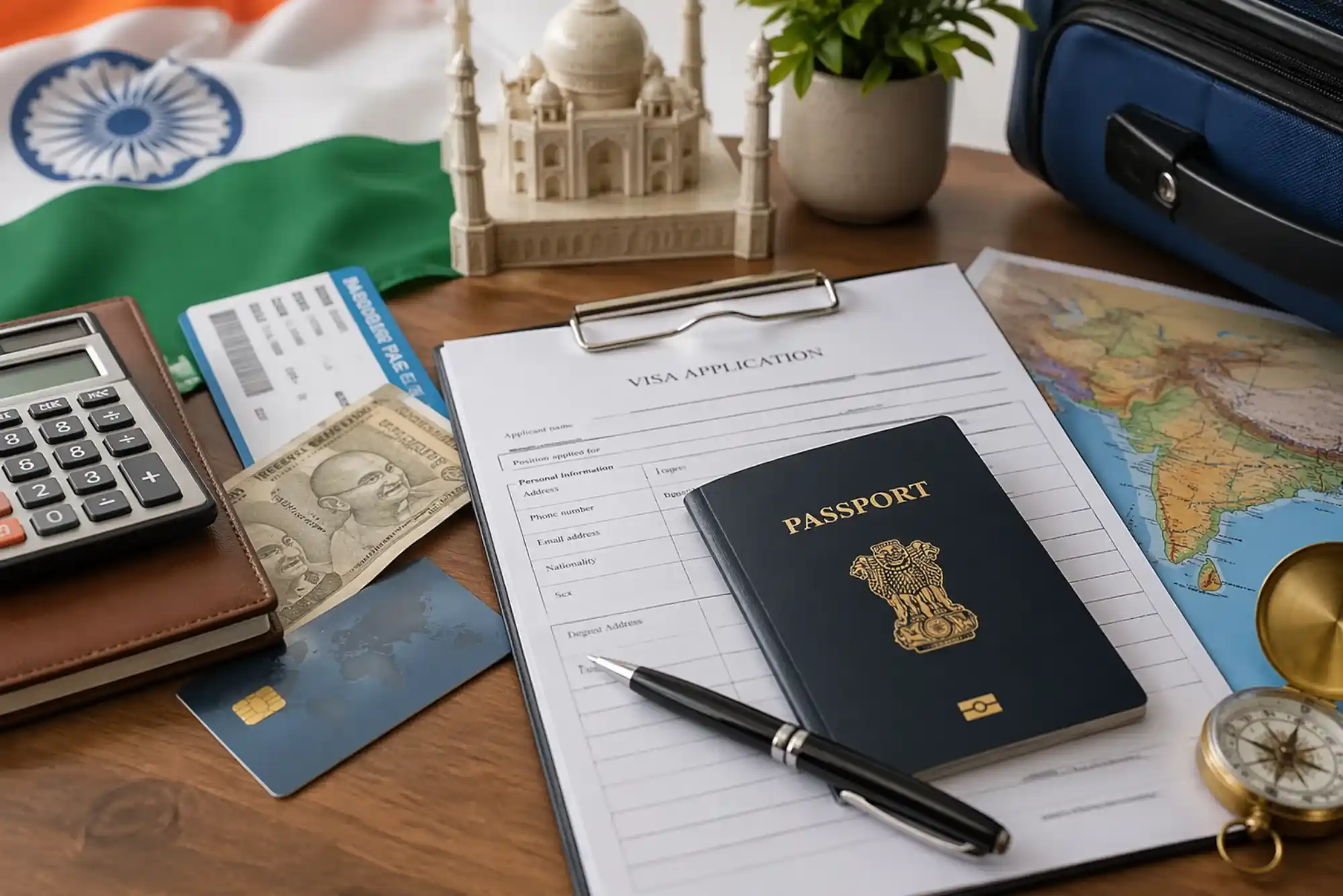
If you are planning a trip to India in 2026, one of the first questions you will probably ask is how much the visa will cost. The answer is not always simple because India visa fees vary by visa type, applicant nationality, visa duration, and whether you apply for a regular visa or an e-Visa. That means the real cost of getting permission to travel is often more than just one published fee.
For tourists, students, business travelers, and people visiting for medical reasons, understanding the full India visa price in 2026 helps with budgeting and avoids last-minute surprises. In many cases, applicants focus only on the official fee and forget about related costs such as bank charges, documentation, photo requirements, travel to a visa center, and airfare planning.
This guide explains the total cost, common fee ranges, and step-by-step process in a practical way. It is written for real travelers who want to understand what they may actually pay, what can change from one country to another, and how to prepare for the application smoothly.
Why India Visa Price in 2026 Is Not One Fixed Number
India does not use one universal visa fee for everyone. The Government of India’s official visa system shows that visa cost depends on the type of visa, its duration, the nationality of the applicant, and in some cases the processing fee charged by an outsourcing agency. For regular visas, the exact basic fee is shown during the online registration process rather than being one flat amount for all applicants.
For e-Visas, the government publishes country-wise fee tables. Those tables make it clear that two travelers applying for the same category may still see different charges depending on their passport country. That is why any article promising one universal India visa price can be misleading.
A better approach is to understand the main fee bands, know what type of visa you need, and then estimate the total cost around that official base price. This is especially helpful when you are comparing tourism, business, and short-term travel plans.

India e-Visa Fee in 2026
For many eligible nationalities, India’s e-Tourist visa fees in the official February 20, 2026 table are listed at US$10 for a 30-day visa from April to June, US$25 for a 30-day visa from July to March, US$40 for a 1-year e-Tourist visa, and US$200 for a 5-year e-Tourist visa. The same official table notes that a 3% bank charge is added on applicable e-Visa fees. These figures are country-specific, so some passports have different rates or exemptions.
That means a traveler should not assume the cheapest published tourist fee will apply to them automatically. The best way to think about it is that India e-Visa pricing starts with an official category fee and then may shift based on nationality and payment charges.
If your trip budget includes both visa fees and flight planning, it helps to compare likely transport costs early. Looking at airline ticket prices for different routes can help you estimate the wider cost of travel rather than treating the visa as an isolated expense.
Business, Medical, and Other India e-Visa Categories
India’s country-wise 2026 e-Visa fee table for e-Business, e-Medical, e-Medical Attendant, e-Ayush, e-Ayush Attendant, and e-Conference visas shows that pricing also varies by nationality. For many countries, the official listed rates are commonly around US$120 for e-Business and around US$80 for several medical and conference categories, again with exceptions by passport country and a 3% bank charge on applicable e-Visa fees.
This matters because some travelers search for “India visa price” when they really need a category beyond tourism. A business traveler attending meetings, an individual seeking treatment, or a guest going to a conference may face a noticeably different fee structure from a standard tourist.
So before paying anything, confirm the correct category first. The wrong visa category can create delays, reapplication costs, or even refusal if the purpose of travel and the selected visa do not match.
Regular Visa vs e-Visa: Which One Changes the Cost?
The regular visa and e-Visa systems are related but not identical. The official regular visa portal describes a three-step process: apply online, submit documents at the Indian Visa Application Center or mission, and then receive the passport back after processing. The e-Visa portal uses a different flow: apply online, upload photo and passport page, pay the e-Visa fee online, receive ETA by email, and then travel to India through an authorized immigration checkpoint.
In practice, the e-Visa route is often simpler for short-term eligible travel, but it does not always mean the total cost is lower for every traveler. The regular visa route may include mission-specific fees or outsourcing charges, while the e-Visa route adds the online payment charge where applicable. The right choice depends on eligibility, trip purpose, and how long you intend to stay.
It is also worth remembering that the Government of India says it has not authorized any agent or intermediary to charge any fee for emergency or express visa or e-Visa facilitation. That is an important warning for travelers who are tempted by unofficial shortcuts or inflated “urgent processing” offers.
Total Cost Beyond the Official Visa Fee
The official fee is only the starting point. The true India visa price in 2026 for most travelers includes related costs that may not appear in the headline rate. These can include payment charges, passport photos, document printing, courier fees, internet cafe or form-filling help, and transportation to a visa center if you are not using the e-Visa route.
If you are applying from another country and also arranging flights, it is smart to look at international airfare examples and travel cost breakdowns to understand how visa expenses fit into the larger journey budget. Even though the route is different, the budgeting logic is useful when you are planning a cross-border trip with multiple cost layers.
Some travelers may also spend extra money correcting mistakes. A wrong passport number, poor photo upload, or mismatch between passport details and application form can force delays or resubmission. That kind of error can make a “cheap” visa much more expensive overall.
India Visa Process in 2026
The first step is choosing the correct visa type. That sounds obvious, but it is the foundation of the whole process. A tourist visa is for leisure travel and casual visiting. A business visa is for commercial activity. A medical or conference visa has its own rules. If the category is wrong, the fee you pay may not match your actual travel purpose.
For a regular visa, the official process begins with the online form. After you complete it, you print and sign the application and submit it along with your passport and supporting documents to the relevant visa application center or Indian mission on the scheduled date. :contentReference[oaicite:7]{index=7}
For an e-Visa, the official process is more direct. You apply online, upload the required photo and passport page, pay the fee online, receive your Electronic Travel Authorization by email, and then present it on arrival at the immigration checkpoint.
That makes e-Visas attractive for travelers who want a simpler digital flow, but only if their nationality and purpose of travel qualify.
How to Estimate Your India Visa Budget More Accurately
A practical way to estimate cost is to divide the budget into four parts: official visa fee, payment or banking charge, document preparation cost, and total travel planning cost. This keeps you from underestimating the amount needed.
For example, if your passport qualifies for a lower tourist e-Visa fee, your overall cost may still rise once you add bank charges and travel expenses. On the other hand, if your nationality falls into a higher fee tier for business or long-validity travel, the visa may become only one part of a larger planning budget.
It also helps to keep an eye on latest travel-related updates and changes before applying, especially if your trip is tied to a seasonal plan, a work deadline, or a family visit. Travel rules and site workflows can change, even when the main visa structure remains the same.
Common Mistakes That Increase India Visa Cost
One common mistake is applying under the wrong category just because it appears cheaper. Another is using an unofficial service that adds unnecessary “support” fees. A third is ignoring country-specific pricing and assuming the fee you saw on a forum or social media post will apply to your passport.
There are also practical mistakes. Low-quality passport scans, poor photo formatting, incomplete forms, and careless spelling can slow the process. In some cases, the applicant then pays more for corrections, extra travel, or delayed trip arrangements.
Travelers can also save time by reviewing general travel tips and planning advice before starting paperwork. Better preparation reduces the chance of paying for rushed fixes later.
Who Should Check the Official Fee Table Most Carefully?
Anyone should verify their fee, but some travelers need to be extra careful. That includes people applying for long-validity visas, applicants using passports from countries with different fee bands, business travelers, and anyone comparing a regular visa with an e-Visa.
It is especially important if your travel budget is tight. A difference of a few dollars in official fee may not matter much, but a difference in visa category, validity period, or external charges can have a visible impact on your total plan.
That is why the smartest approach is not to search for a single universal price, but to match your travel purpose, nationality, and application route to the official system first.
Conclusion
India visa price in 2026 depends on more than one factor. The official cost can vary by nationality, visa category, validity period, and whether you use a regular visa or e-Visa route. For many travelers, tourist e-Visa fees fall into clear official ranges, while business, medical, and other categories can cost more and also depend on the passport held. Regular visa fees are mission-specific and may include outsourcing charges, while applicable e-Visas also carry a 3% bank charge. :contentReference[oaicite:11]{index=11}
The best way to control your total spend is to identify the correct visa type, verify the official fee for your nationality, and budget for related travel and document costs in advance. If you do that, the process becomes much easier, and you are far less likely to waste money on mistakes or unofficial service add-ons.
Related Reading: USA Tour Package with Visa from India Price in 2026: Total Cost, Fees & Process

